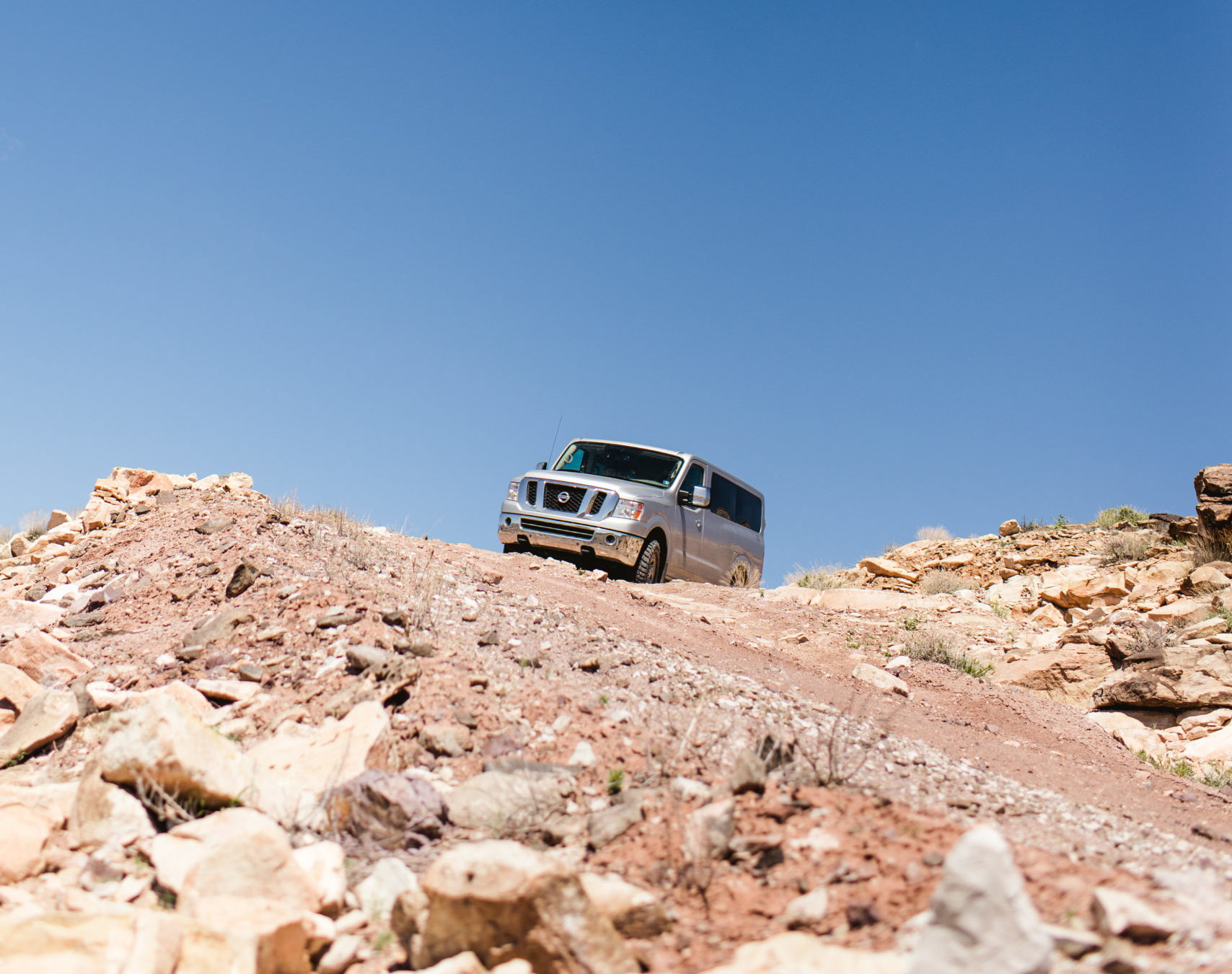
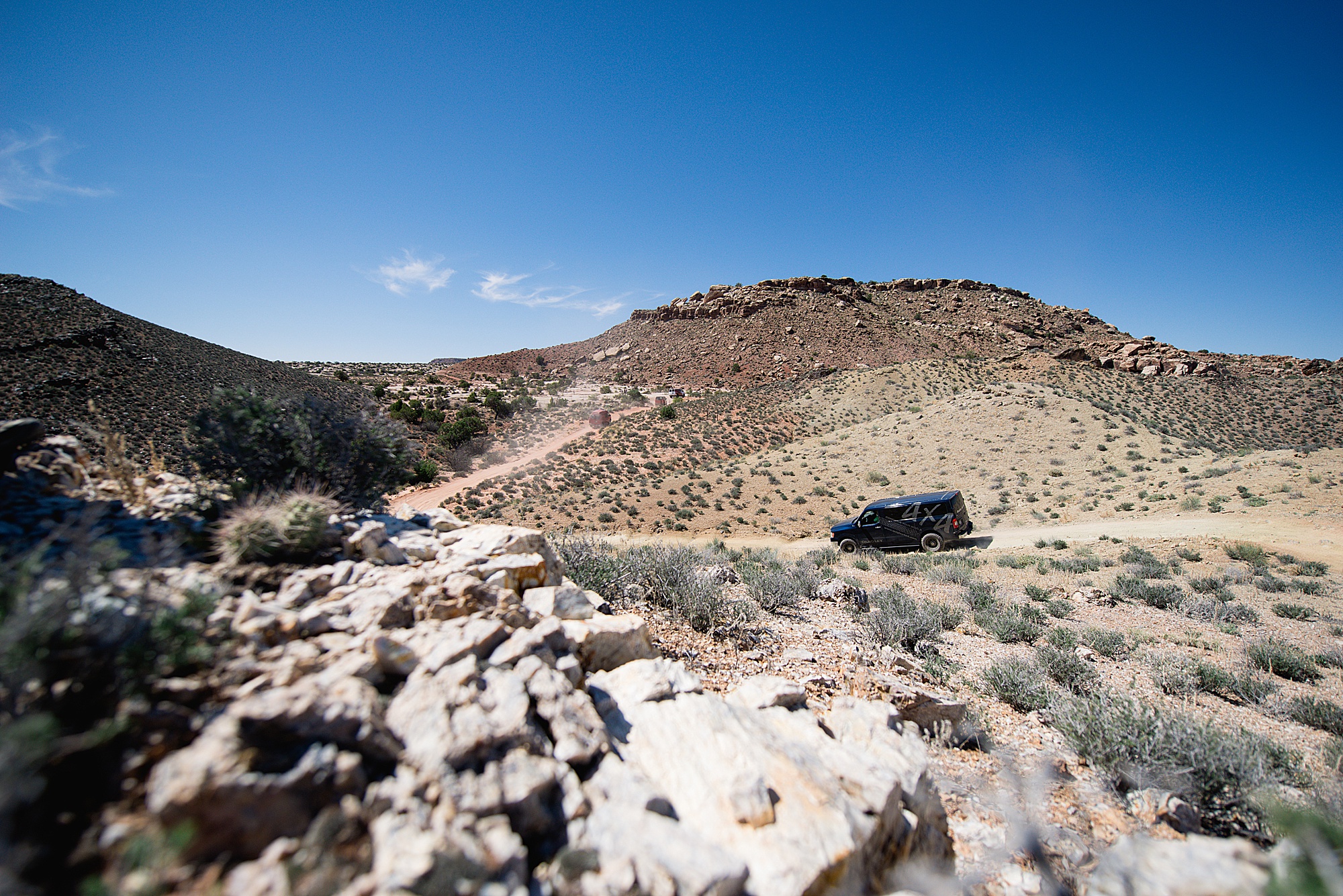
There are a few angles that are important to customers who use their 4x4s for off-road adventures. These angles are called approach, breakover, and departure. Such measurements can be of use if the vehicle is to be transported or used in rough terrain that involves steep hills and large obstacles.
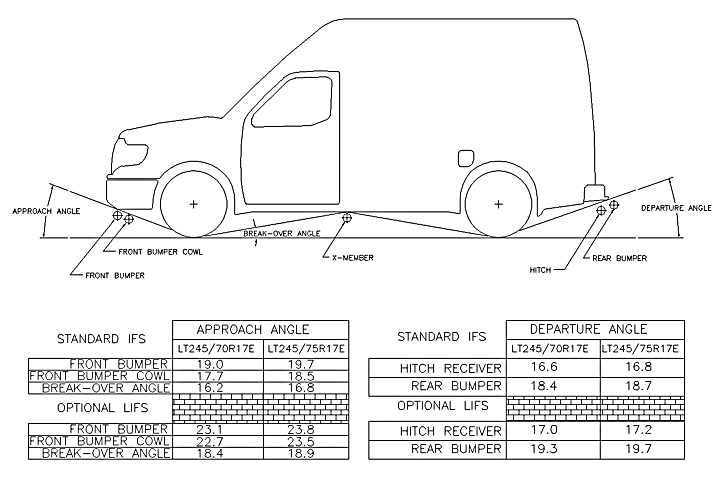
| Measurement | LT245/70R17E tires | LT245/75R17E tires |
|---|---|---|
| Standard IFS | ||
| Approach angle, front bumper | 19.0° | 19.7° |
| Approach angle, front bumper cowl | 17.7° | 18.5° |
| Break-over angle | 16.2° | 16.8° |
| Departure angle, hitch receiver | 16.6° | 16.8° |
| Departure angle, rear bumper | 18.4° | 18.7° |
| Optional LIFS | ||
| Approach angle, front bumper | 23.1° | 23.8° |
| Approach angle, front bumper cowl | 22.7° | 23.5° |
| Break-over angle | 18.4° | 18.9° |
| Departure angle, hitch receiver | 17.0° | 17.2° |
| Departure angle, rear bumper | 19.3° | 19.7° |
Approach Angle
The approach angle involves the front portion of the vehicle. It is the steepest ramp you can approach without having the front of the vehicle hit the ramp. The measurement is taken from the front tire at ground to the lowest hanging component or bottom of the front bumper, whichever component fails to clear first.
Breakover Angle
The breakover angle is somewhat less intuitive to understand but pertains to how large an obstacle can be driven over without grounding either the frame at the midpoint of the wheelbase or a low-hanging component such as the transfer case. It is easy to see, however, that a longer wheelbase would reduce this capability, while higher ground clearance would increase it. So the best break-over angles are achieved by vehicles with short wheelbase and high ground clearance.
Departure Angle
The departure angle involves the rear portion of the vehicle. It is the steepest ramp you can descend to level ground without scraping the rear of the vehicle against the ramp. Again you measure from the rear tire at ground to the lowest hanging component or the bottom of the rear bumper, whichever component fails to clear first.